Frequently Asked Questions
Hooray for hearing loops! Hearing aid users across the country are chanting, “Get in the Loop!”. Induction hearing loops are a simple solution to an invisible problem that many hard of hearing people face daily. Very simply, Induction loops consist of a wire looped around a room and plugged in to an amplifier, which is then plugged in to an audio/sound system or TV. Churches and public auditoriums are the perfect environment for loops. There are residential loops available for home TV rooms, which can be wired or used with a seat pad that includes a loop. They plug in to the TV and the hearing aid wearer merely turns on their T-coil. Voila! No need to turn up the volume and annoy others in the home! Not to mention that the sound is CLEAR.
Loop systems have been in use in Europe for years and it is rare that a public area does not have a loop system. All hearing aids in Europe are required to have T-coils, which is not the case in the US. Yet.
The cost of a loop in a residential setting can be $200-300. Installation costs are minimal or homeowners can even install the loop themselves. Commercial loop systems involve professional design to make sure any interference is compensated for and that the installation complies with IEC standards. Typical costs are from $5,000 to $15,000 for most installations, depending on the size and construction of the room. However, venues such as sports arenas, airports and large theaters can run in to six figures. Certainly, having a professional installer is important since a bad installation serves no one.
There are even loop systems available for counter installations such as pharmacies, bank windows, ticket counters, etc., where it is important to hear clearly. A portable loop system may work for some in meetings or restaurants. And the best thing about loop systems? One does not need to advertise that they have a hearing loss by wearing one of the headsets provided in most public venues to hear the speaker through the FM or infrared system.
Assist 2 Hear, LLC is proud to promote the Loop Colorado initiative to install loop systems across Colorado and the nation. Many states have loop initiatives and several states have had very successful grassroots initiatives to loop their state. Michigan, Wisconsin, New York, Florida, Washington, Utah, Arizona and New Mexico have been very actively promoting loop installations.
T-coils have many names – T-switch, T-coil, audio coil or telephone coil. How does a T-coil work in a hearing aid/cochlear implant? It effectively turns the hearing aid or cochlear implant into your own personal sound system, allowing it to communicate directly to ALDs/PLDs, FM or infrared systems, telephones and loop systems either automatically or by the flip of a switch. Very simply, T-coils are little coils of copper wire mounted inside your hearing aids, which act personalized, wireless loudspeakers. When used with devices mentioned above, T-coils help block out the frustrating background noise so you only hear what comes through the device you are listening to such as the TV, audio/MP3 player, etc. One technology gaining acceptance throughout the U.S. is the induction loop. An induction loop simply creates a magnetic field which is picked up by the T-coil, allowing T-coil users the ability to hear in church, auditoriums, meeting rooms, etc. with only their T-coil turned on. This technology negates the need for headphones typically provided in these environments and users rave about the quality of the sound. 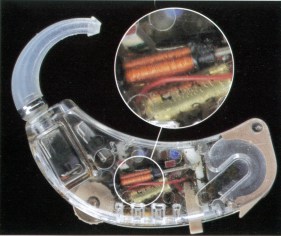
It is estimated that about 70-80 percent of hearing aids in the U.S. have T-coils. Most of the newer hearing aids are being equipped with T-coils. However, the very small hearing aids that go all the way in the canal do not typically have room for the T-coil, although technology for smaller T-coils is catching up and it is expected that these will one day be able to accommodate T-coils. Certainly demand will play a part in this technology. Bluetooth technology is being installed in some new hearing aids. The Bluetooth technology is short range and is great for telephone and TV but still does not offer help in larger venues. Some Bluetooth streamers have a t-coil and will work in the loop.
Many people do not know if their hearing aids have T-coils. Check with your audiologist to make sure they are installed, activated and set for your personal needs. We find that many t-coils are set too low and need to be adjusted to a higher volume, or the orientation of the coil needs to be changed to get the full benefit from the hearing loop. It is important to have a manual button for the t-coil. Most Auto-coils will not be activated by the loop so be sure you ask for a MANUAL T-coil setting. Another popular option is an MT setting which allows a small amount of the hearing aid’s microphone in the mix so room sounds such as someone speaking next to you can be heard. These are personal choices which the audiologist can help with.
NOTE: Cochlear brand implants do not currently have a vertical t-coil which affects the experience in the loop. However, Cochlear has come out with a Loop Booster accessory to help their clients hear better in looped venues.
FM (frequency like a radio) and Infrared (direct line of sight like a TV remote) have been the traditional forms of assistive listening in the US for many years. Both meet ADA standards for assistive listening and communication access. Both are relatively inexpensive compared to a loop system. But neither FM or Infrared systems give the wonderful experience of a loop system. To use an FM or Infrared system, one must remove their precious hearing aids to wear a headset which most folks simply do not want to do. Not only to headsets mess up the ladies hair but there are sanitary concerns, battery issues, static from the frequency and one has to take the time and effort to seek out the headsets and typically leave an ID or deposit until they are returned. We find most FM and Infrared systems get very little use because of these issues. AND, both FM and Infrared simply amplify the sound which is not what hearing aid users need or want! Even if the venue has neckloops, which work with t-coils in hearing aids, the sound quality is inferior to a loop system. AND, if one has a pacemaker, insulin pump or other medical device, manufacturers recommend against use of neckloops for fear of interference with the device (see below).
Some venues have told us that they already have a loop system. There is some misunderstanding in many venues. Often when we are told that there is already a loop system, they are referring to a personal neckloop worn around the neck that works with t-coils but is connected to the FM or IR system in the room. The sound through these neckloops is often inferior with static over the radio waves. And since the loop “wire” is directly below the hearing aid/t-coil, the sound can come and go because there is a “null” when one is directly over a loop wire, whether it is the neckloop wire or the wire in a perimeter room loop.
A hearing loop system requires NO headset or neckloop for the t-coil equipped hearing aid user and the loop takes advantage of the user’s own hearing aid which is set for their hearing loss. The user merely walks in to the venue, turns on the t-coil setting on their hearing aid and enjoys the performance, presentation or sermon.The sound is sent from the loop directly to the hearing aid with no background noise, ambient noise, reverberation or static. Users comment that it sounds like the speaker is right in their head! And they would be correct since the loop send the sound directly to the hearing aid.
NOTE OF CAUTION REGARDING PERSONAL NECKLOOPS: Since a personal neckloop typically provided with an FM or IR system sets right over where a pacemaker may be, those with pacemakers, insulin pumps or other medical devices should not wear these neckloops. The magnetic field induced by these neckloops could potentially interfere with programming of devices or even heat up tissue in heart leads. Any magnetic field should be kept at least 6″ away from these devices. Read more in this article on Page 239 for information regarding pacemakers and potential risks. Location within a hearing loop field does not pose a risk – only having the magnetic field within close proximity to the pacemaker is a potential issue.
BOTTOM LINE – We Don’t Get Tears of Joy, Smiles Ear to Ear and Hugs when folks use FM or Infrared systems.
Loops and Bluetooth are like apples and oranges. Both are wireless technologies, but Bluetooth is a short range signal that must be “paired” with a phone or TV and typically requires an intermediate device to interpret the Bluetooth signal and convert it to a signal the hearing aid can accept and transmit. It is important to understand that there are no “Bluetooth Hearing Aids.” A loop has no range limit – one just needs to be “in the loop” area, as opposed to the short range Bluetooth signal. Loops do not require any intermediate devices since the signal is sent directly to the t-coil in the hearing aid. Bluetooth interfaces with phones and TVs but do not work in large venues. One major drawback of Bluetooth is power consumption, which is another reason an intermediate device, such as a streamer, is necessary. Most manufacturers agree that Bluetooth is not the wave of the future due to power consumption and a delay in the signal which can have negative effects on overall sound quality. In an interview with Jenny Groth, M.A., who is Director of Audiology Communication for ReSound, Jenny said “There are no hearing aids today that directly implement Bluetooth. So, every hearing aid that claims to be able to utilize Bluetooth has some sort of intermediate device that interprets the Bluetooth signal and then changes the information into a wireless technology that the hearing aid can accept and transmit.” Bluetooth works well with TV and phones using a streamer, remote, etc. while a hearing loop system needs no intermediate device, uses literally no power from the hearing aid and is only limited by the size of the loop. The good news is that one can have BOTH Bluetooth and a t-coil in their hearing aids to maximize hearing is different situations.
Read this blog for more information about bluetooth and telecoils in hearing aids…..
Hearing loss has been termed the “invisible” disability – makes sense because we cannot see hearing loss. While hearing aids greatly improve hearing, they certainly are not a cure for hearing loss, kind of like eyeglasses are not a cure for bad eyesight! Many are disappointed and frustrated that their hearing aids do not work in all environments. Noisy environments such as auditoriums and restaurants are of particular note. Hearing aids work best when the speaker is 3-6 feet away in a relatively quiet environment. Since the hearing aid microphones are in or on your ears, they pick up all sound and don’t effectively discriminate voices from background noise. Digital hearing aids are constantly improving but still fall short in these environments. Assistive Listening Devices (ALDs), also known as Personal Listening Devices (PLDs) can help the hearing aids hear better in certain environments such as auditoriums, classrooms, meeting rooms, workplaces and restaurants. These devices work by placing the microphone closer to the speaker’s mouth and then transmit the sound directly to your T-coil-equipped hearing aid, which is adjusted for your specific hearing loss, or through headphones or earphones/earbuds for those not wearing hearing aids. These devices can also help keep peace in the family by allowing the TV volume to remain at “normal” levels while amplifying the volume for the individual with TV listening hearing loss, with or without a hearing aid. Assistive Listening Devices are a cost effective solution to many hearing issues. The ALDs generally work very well for those that don’t mind carrying a little transmitter/receiver. A small price for being able to hear in many environments! Be sure to discuss how ALDs can supplement the effectiveness of your hearing aids with your hearing professional.
Assistive Listening Devices (ALDs), also known as Personal Listening Devices (PLDs), can be an alternative to hearing aids for those with mild hearing loss or that cannot or will not pay the price for hearing aids. However, ALDs can also enhance the hearing aids by helping them hear better in different environments. Assistive Listening Devices can work with the T-coils in hearing aids to help avoid aggravating background noise. Products for TV, audio (music and MP3s), phones and public places are available with earphones/earbuds and headphones for use without hearing aids or with neck loops for use with T-coils hearing aids.